
Orange Directory Collections
Orange city directories and related historical collections are split across the History Center, city links, archives, and genealogy access points. The public-facing library pages did not expose a defensible exhaustive publisher and year list. A sound citation therefore names the volume, title page, publisher, territory, and year actually inspected. The coverage table starts with collections that the research confirms without inventing an unverified printed run.
| Collection | Years | Where Held | Access |
|---|---|---|---|
| Orange city and telephone directories | Exact official run not published online | Orange Public Library & History Center catalog and staff | Request title and year; inspect volume |
| Reverse or criss-cross volumes | Exact run requires History Center inventory | History Center collections | Ask whether a street section exists |
| City of Orange tax assessment rolls | 1900-1934 | City records page and library digital links | Owner and property evidence |
| Orange local-history digital objects | Repository-specific | Orange Public Library Digital Collections | Text, Image, Video, and Geo Search |
| Federal population census | Through 1950 currently public | NARA and library genealogy databases | Household, address, and relationship context |
| Archival finding aids | Repository-specific | Online Archive of California | Locate collections; item may not be digitized |
Directory years can be missing, unindexed, or held in a form that requires a staff request. The right next step after a blank online search is not to guess a publisher. Ask for the call number, title page, abbreviation key, and whether the volume is householder, telephone, or reverse order.
Orange Directory History Desk
The Orange Public Library entry point and its Orange Public Library & History Center are the local starting point for Orange city directories, telephone books, yearbooks, newspaper microfilm, obituary files, tax rolls, photographs, clippings, and ephemera. Its digital collection has separate Text Search, Video Search, Image Search, and Geo Search controls. An address may work in Geo Search when a surname fails in OCR. A business, subdivision, or building term can provide a second route into the same local memory.
Staff help is listed at history@cityoforange.org and (714) 288-2465. A focused request should include the surname or address, date window, likely directory type, and the question the entry must answer. The city’s 2026 master fee schedule lists personal-use local-history digital images at $5 each, obituary requests at $25, and extensive research at $50 per hour. Confirm any amount before ordering.
The Orange digital history collection is the live local search entry point, while the Online Archive of California is the archive source represented by the image below. The Orange County Clerk-Recorder service inventory supplies the county-side record context. The library collection is useful for photographs and captions as well as text records, but a later caption can be different from the original record. Corroborate the clue with a directory, tax roll, deed, newspaper, or permit.
The local repository screenshot shows why an Orange city directory search should repeat the same address in more than one mode.
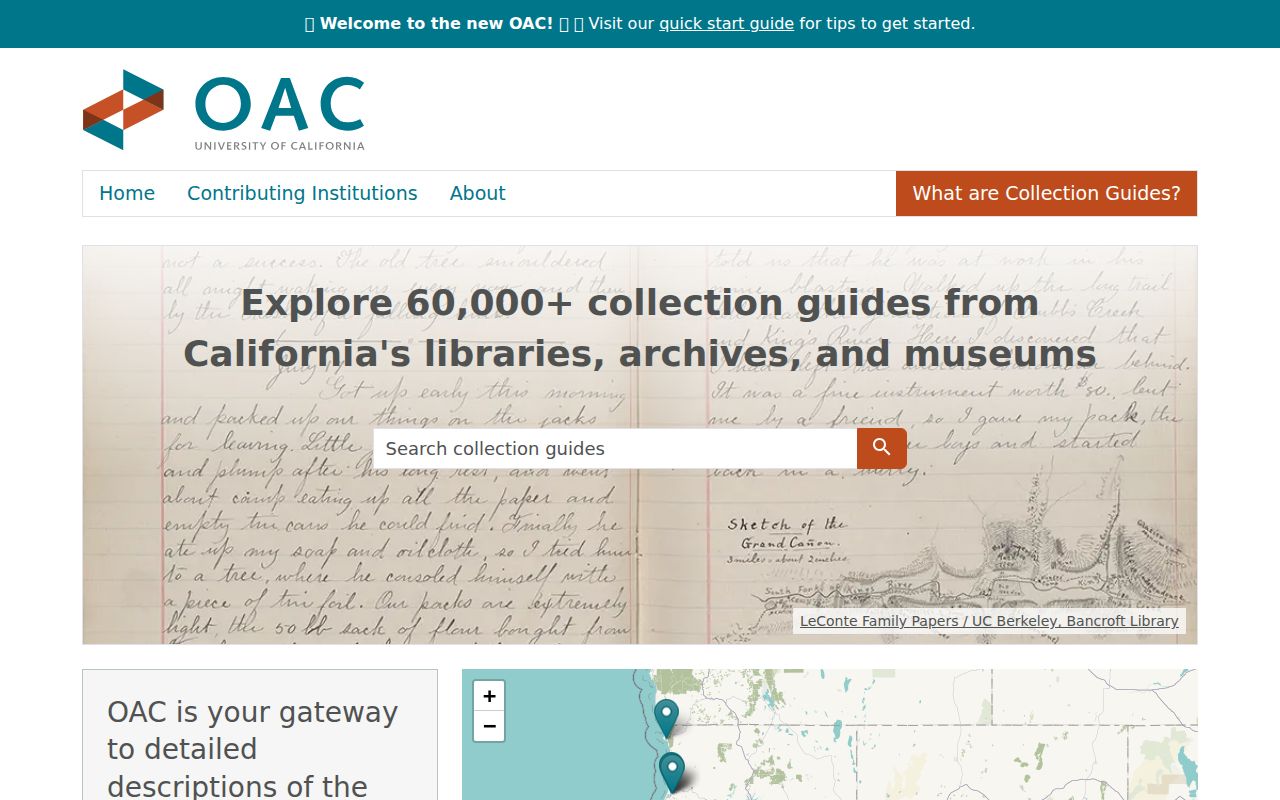
Geo Search can connect a place to the wider Orange city directories project even when a typed name is not indexed cleanly.
The Orange County Clerk-Recorder services page supplies the county record context that helps separate a directory clue from a recorded deed or vital copy.
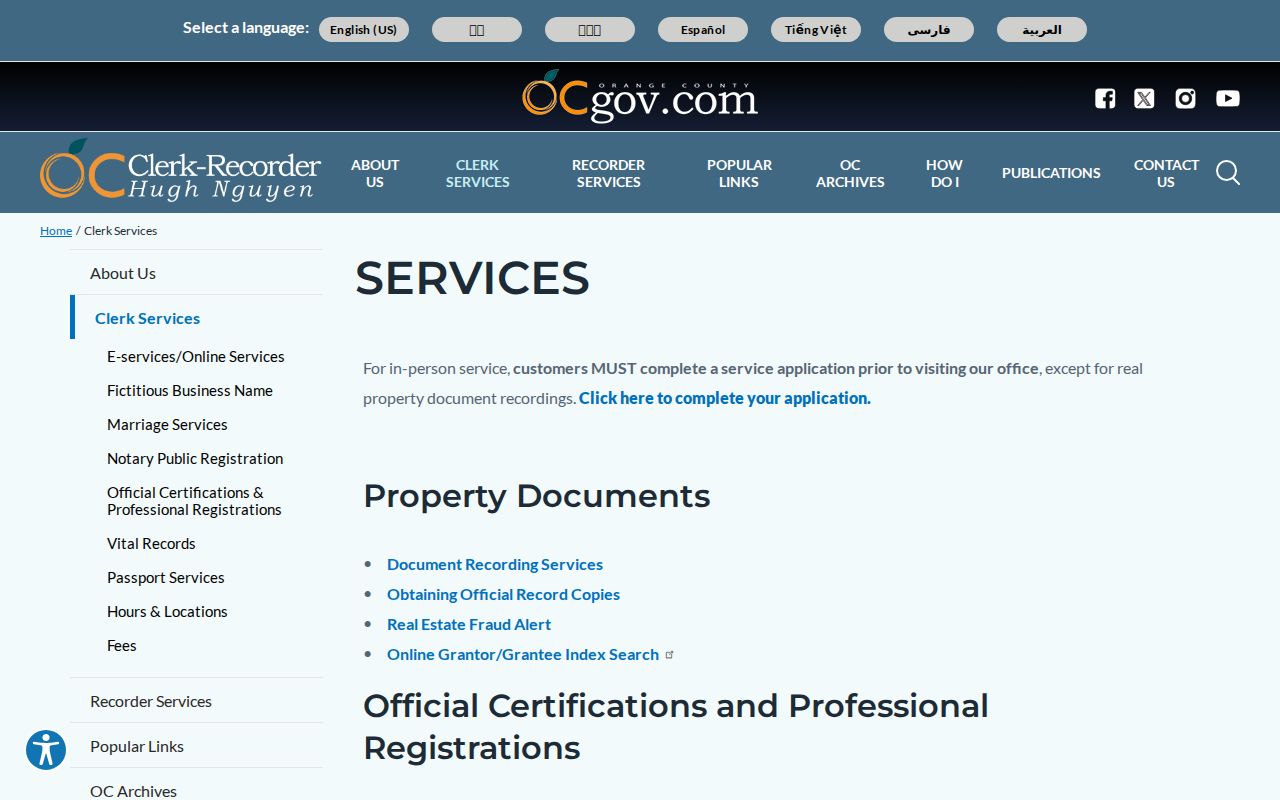
County services fill the official-record side of the historical trail, while the library holds the local directory and image context.
Reading Orange Directory Entries
An Orange city directory entry needs to be read as a compact record. The exact conventions vary by publisher and year, so inspect the volume’s title page and abbreviation key before expanding a mark. The sample inventory below describes fields that may appear in Southern California directories and must be verified against the Orange volume in hand.
| Name | Surname and given name or initial; a spouse may appear in parentheses. |
|---|---|
| Occupation | A trade, profession, or role, sometimes paired with an organization. |
| Address | House number and street, with residence or boarding abbreviations that vary by volume. |
| Ownership mark | A symbol or note if that publisher recorded ownership status; confirm the key. |
| Widow notation | A relationship clue such as a widow reference, when the volume uses one. |
| Telephone or business line | A subscriber or business address that may differ from the home listing. |
- Criss-cross section
- The street-order portion that lets a number lead to a listed person or subscriber.
- Householder index
- The name-order portion that groups entries under a head of household or principal name.
- Abbreviation key
- The publisher’s guide to residence, occupation, relationship, and street shorthand; photograph it before reading entries.
A directory entry is not a certified vital record or deed. It can establish that a name was listed in a place for a publication year, then point to the record that can confirm a relationship or property fact.
Orange Reverse Directory Terms
Reverse directories turn an address into a name lead. They are especially helpful when a property question begins with a number rather than a surname. Read both sides of the target number because the neighboring entries can reveal a street spelling, apartment convention, subdivision, or later renumbering clue. A telephone listing can identify a subscriber without proving that every household member used the line.
Ask the History Center whether an Orange volume is arranged by street and number, by telephone subscriber, or by another local order. “Criss-cross” is a useful description, but it does not prove that every year uses the same layout. Preserve the page number, title, publisher, and year in the research note.
The City of Orange records page also links historic tax assessment rolls. Those 1900-1934 rolls show assessed owner and property information, which can support a reverse-directory clue without replacing it.
Orange Tax Rolls Between Directories
The 1900-1934 Orange tax assessment rolls are a locally distinctive bridge. They can place an assessed owner and property in the years between directory and census coverage. The rolls should be treated as owner and property evidence, not a full household record. Pair the name with a street, lot, tract, or property description, then test the connection in deeds, newspapers, or a directory.
This collection matters because the 1890 federal population census was largely destroyed nationally. Orange family history often crosses the gap with tax lists, directories, voter or deed evidence, newspaper notices, and photographs. The tax roll’s usefulness grows when a current APN or legal description can be connected back to a historic lot.
Historic tax material is linked through the city’s public-records route, while local images and text are in the History Center repository. A digital scan may preserve the page but not make every name searchable. Browse by page or ask staff when OCR is thin.
Tracing Orange Families Through Directories
Use Orange city directories as a sequence, not as isolated name hits. A household can change address, spelling, relationship, or listing style. The following method pairs a directory trail with census, deed, tax, and obituary evidence while keeping uncertainty visible.
- Choose a starting person, address, or parcel and write down every spelling and directional variant.
- Find the newest available directory entry, then record address, spouse notation, occupation, owner mark, telephone detail, and page.
- Move backward one volume at a time and note every address change, absence, and nearby entry.
- Pair released census years with the nearest directory years, comparing household members, ages, birthplace, occupation, and street or enumeration context.
- Use deeds and the 1900-1934 tax rolls to separate a property owner from a listed occupant.
- Close a disappearance with newspapers, obituary material, probate, cemetery records, or a later address, while stating which source supplies each clue.
A missing year can mean a move, a canvass miss, a name variant, or an unlisted household. It is not proof of death. If a directory clue needs modern confirmation, the Orange resident lookup workflow adds current court, license, property, and vital-record checks.
Orange Census Pairing for Directories
NARA’s census framework releases population schedules after 72 years, making 1950 the newest public population census in 2026. Census pages can show household relationships, ages, birthplace, occupation, and an address or enumeration setting. They are decennial snapshots, while a city directory may appear in intervening years. Together they create a better time line.
The National Archives census research page is the federal access point. Library genealogy databases may make page images easier to search. Census geography can shift, and an address may be written differently from a directory. Preserve the enumeration district, sheet, household number, and image reference when available.
Use the census to test the household composition suggested by an Orange city directory, not to assume that one source corrects the other. A boarder, lodger, visitor, or absent person can explain a difference.
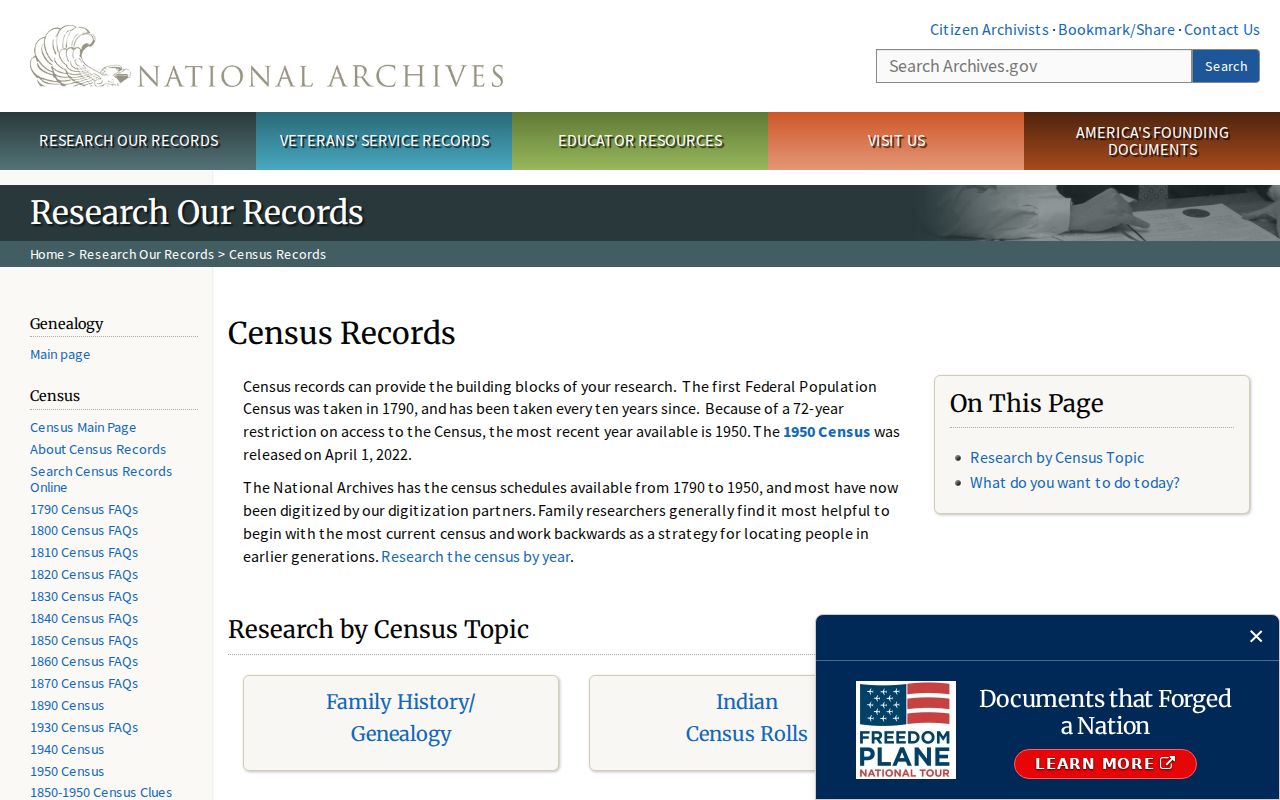
The census research page provides the release and access context behind pairing an old directory with a federal household snapshot.
Orange Directories Before County Formation
Orange County was created in 1889 from Los Angeles County territory, while the City of Orange incorporated in 1888. A pre-1889 land or court search may therefore sit under Los Angeles County rather than Orange County. That repository shift is a key local history fact, not a reason to assume that a missing Orange name never existed.
For earlier family research, add mission or parish registers, cemetery records, newspapers, land records, and archival finding aids. The Online Archive of California can locate collections by place or creator, even when the item is not digitized. The California State Archives supplies catalog and finding-aid access for state-held records.
Orange city directories will not solve every pre-county gap. A legal description, land predecessor, church entry, or newspaper notice may be the clue that moves the search into the right jurisdiction.
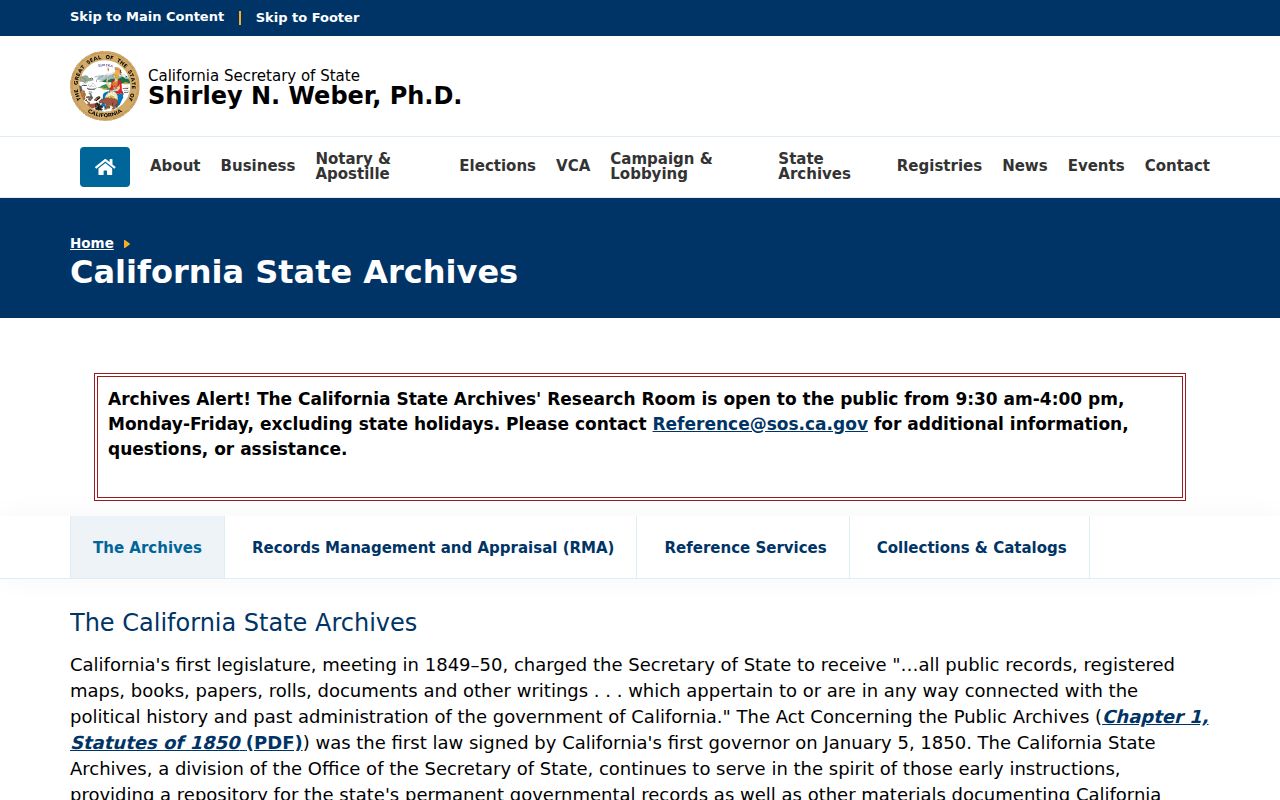
State archival finding aids help locate a repository; they do not guarantee that the named item is scanned or open without an appointment.
Orange Directory Proof Standards
A strong Orange city directory citation records the name as printed, the page, the street line, the publication year, and the volume’s publisher or title. It then says what the entry proves: a listing, an address lead, an occupation clue, or a household relationship. It does not silently turn that clue into current residence, title, or identity.
Compare names with and without diacritics, compound surnames, maternal and paternal order, Anglicized first names, initials, and common spelling changes. Local indexes can reflect Spanish and Mexican land history as well as later migration. Search the address and spouse or business term when a surname search misses the entry.
For a volume held outside Orange, the Online Archive of California or a library catalog may identify the collection. For a current record, use the custodian’s portal rather than a historical directory. Old books are guides to the next source.
Research caution. Orange’s public catalog does not expose a verified exhaustive publisher and year run. Ask the History Center for the exact volume before stating that a directory series covers a particular span.