
Orange Resident Lookup Sources
One Orange name search may cross several custodians. The source table keeps the record relationship clear before a search begins. Ownership is not occupancy. A court party is not automatically a current resident. A business address is not a home. A directory entry is tied to a publication year.
| Record | What It Confirms | Where | Access |
|---|---|---|---|
| Assessor and tax | Parcel, assessment ownership, mailing distinction, values | Orange County Assessor and TCWeb | Free current search |
| Deed index | Recorded parties, document type, date, instrument number | Orange County Clerk-Recorder | Free index; copies paid |
| Court index | Party role, case type, filing events, disposition where public | Orange County Superior Court | Name account or case-number path |
| Vital record | Birth, death, marriage, or dissolution event | County Clerk-Recorder or CDPH | Authorized or informational rules |
| Business or license | Entity, professional status, affiliation, public address | SOS, FBN, DCA | Free public indexes |
| Directory or census | Historic household, address, relationship, age, occupation | History Center and NARA | Collection-specific |
| Unclaimed property | Past reported city or address and holder relationship | State Controller | Free name and city search |
The strongest starting record depends on the question. A known address favors APN and deed work. A family-history question favors a directory, census, obituary, or vital path. A business affiliation favors an entity or license number. The search should say which of those questions it is answering.
Build Orange Resident Anchors
A common name needs two independent anchors before a result is treated as the same person. Useful anchors include an APN or address, approximate age, spouse, middle initial, business, case number, license number, or a date that appears in more than one source. Normalize suffixes, hyphens, diacritics, birth surnames, married forms, and first-name initials. Orange’s historical collections reflect many naming traditions, so a single spelling is not enough.
A disciplined name search follows a short verification trail:
- Write the name exactly as known, then list variants and the one non-name fact that can narrow it.
- Use the county property, court, license, business, or historical source that fits the question.
- Record the date, source, role, address type, and identifier shown in the result.
- Compare a second custodian, such as a deed with an assessor lead or a court party with a case date.
- Inspect or order the underlying document when the index is not enough.
A name match that cannot survive a second anchor stays a lead. The record trail becomes reliable only when the role, time, and place all fit.
Orange Court Name Search
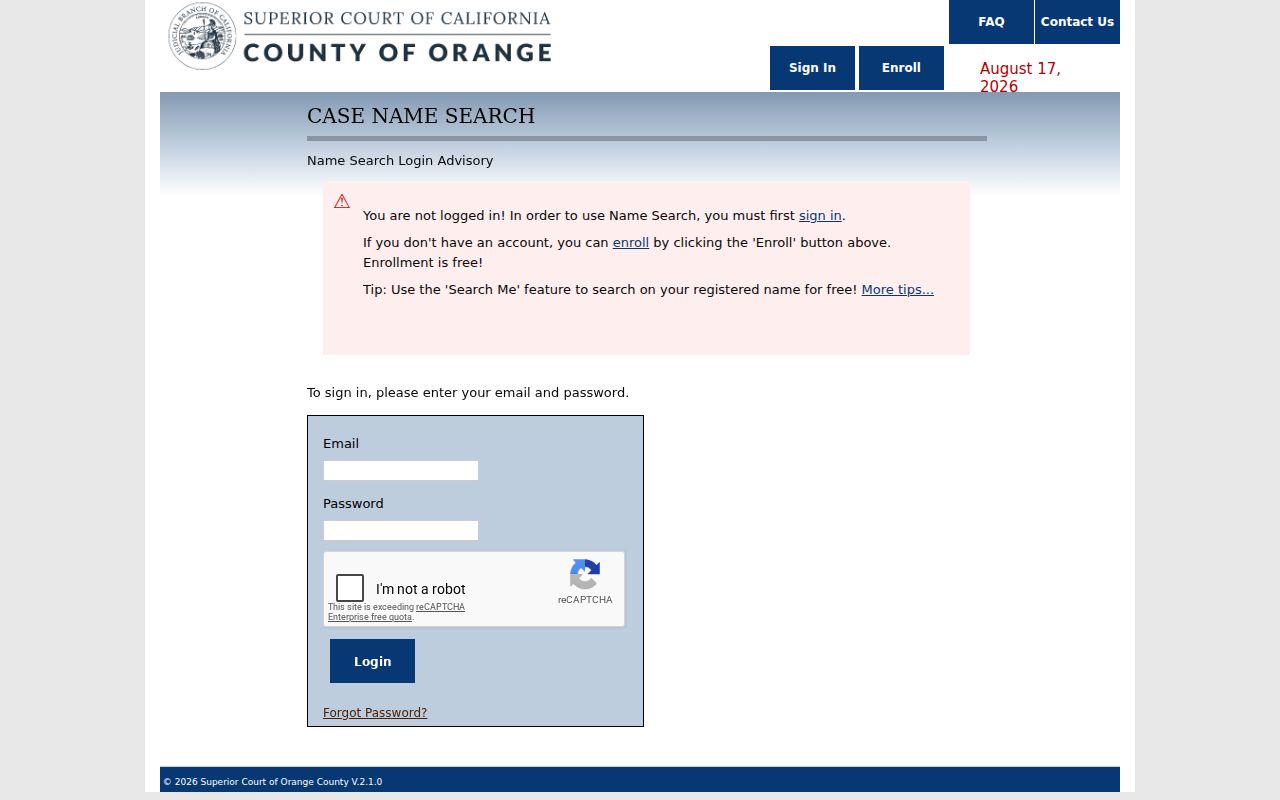
The Orange County Superior Court Case Access page separates civil, criminal and traffic, family, probate, and small claims. If the number is unknown, the Case Name Search accepts a person or business name after sign-in and enrollment. The name service may require payment. A case-number path may be free or limited by division. A result is an index or register lead, not the complete court record.
Use person or business choice, last or business name, optional first and middle names, case category, and filing-date range when the live screen offers them. The court warns that a name result may not associate the correct person with a case. Compare party role, courthouse, filing date, case type, and case number.
| Index fields | Case number, caption, case type, filing date, courthouse, party names and roles. |
|---|---|
| Event fields | Hearing dates, register-of-actions entries, charges or counts where public, and disposition. |
| Limits | Sealed, juvenile, adoption, confidential family, and other restricted material stays restricted. |
| Remote access | Indexes and registers may be available while pleadings remain courthouse-only for some divisions. |
The county party-name screen below shows why enrollment and identity checks belong in an Orange resident lookup workflow.
Use the case number as the durable court anchor. If a document matters, ask the court records unit about inspection, ordinary copies, or a certified copy under that case type’s access rules.
Verifying Orange Resident Records
Verification means matching a person to a record relationship, not collecting every possible mention of a name. Start with the source that can answer the question and then confirm the role elsewhere. For an address lead, the assessor can supply APN and current roll information. The recorder can show the party and document date. The deed can supply the legal description. A court case can add a party role or event date.
- Docket
- The court’s case record or event register, which may list filings, hearings, and disposition entries.
- Index versus image
- An index locates a record. An image or certified copy shows the underlying instrument or certificate, subject to access rules.
- Certified copy
- A custodian-issued copy with a certification that may support an official purpose when the requester is eligible.
- Disposition
- The result or status of a case event, such as a judgment or dismissal, as displayed in a public register.
When a record is wrong, contact the source office. The assessor handles assessment data, the recorder handles indexing and recorded-copy questions, the court clerk handles docket issues, elections handles voter registration, and a licensing board handles license data. A search service cannot rewrite the source record.
For an Orange resident lookup involving family history, preserve the source date and wording of a negative result. “Not found” can mean a spelling variant, a coverage gap, a restricted record, or the wrong jurisdiction.
Orange Property Records and Occupancy
The Orange County Assessor secured-property search is a strong address and APN tool. It can show assessment ownership, situs, mailing information where displayed, values, and characteristics. A mailing address may be elsewhere because of a trust, second property, manager, or mailing preference. A tax roll is not a title chain and does not prove that the owner sleeps at the situs.
The distinction matters in a resident lookup. A deed connects recorded parties to a transaction. A permit names people involved in construction or a property project. A tax notice identifies a mailing destination. None of those records is a complete household roll. Pair the owner lead with a historic directory, census, court event, or other source that actually fits the time and question.
The Assessor portal, OC Public Works GIS, and the county tax search serve different functions. Keep the APN and situs with the result as it moves between them.
Orange Vital Records and Family
Vital records can establish an event and family relationship, but California distinguishes authorized copies from informational copies. Orange County can be the direct route for a known county event. CDPH maintains statewide records and uses mail applications rather than an electronic order portal. A person outside an authorized class can generally request an informational birth, death, or public-marriage copy with the required legend and redactions.
| Record | Public route | Key limit | 2026 fee |
|---|---|---|---|
| Birth | County or CDPH application | Authorized identity-valid copy limited; informational option generally available | $31 |
| Death | County or CDPH application | Informational copy can include cause with redactions | $26 |
| Public marriage | County or CDPH application | Informational copy generally available | $19 |
| Confidential marriage | County Clerk | Parties or court order under Family Code rules | $19 where issuable |
| Dissolution | CDPH certificate or Superior Court file | Certificate is not the court pleading file | $18 certificate |
Mailed authorized-copy applications use a notarized sworn statement and a statutory relationship or eligibility category. Adoption files are confidential under Family Code section 9200 and related rules. Historical indexes can point to a name, but they cannot bypass a restricted copy rule.
Use the Orange County vital-records page or CDPH Vital Records for the current form and fee details. The authorized-copy guidance, fee schedule, and processing-time page should be checked before mailing an application.
Orange Heirs and Business Records
Probate can reconnect an heir to a former Orange address. Start with the decedent’s court index and obituary, then inspect the filed petition or order at the courthouse when the document is not remotely available. Probate parties and fiduciaries are evidence of a case relationship. They are not automatically current residents.
For a business question, combine California Secretary of State bizfile, Orange County fictitious-business-name records, city permits, and the DCA license search. Search fields can include entity name or number, board, license type, first and last name, business, city, county, and ZIP. Results can show status, agent, public address, issue or expiration, and discipline links where exposed.
A professional or business address is an affiliation anchor. Pair it with an APN, a court case, a directory entry, or a public permit only when the dates and roles align. That approach helps a resident lookup distinguish two people with the same name without claiming more than the source says.
Orange Official Resident Leads
Some official searches can supply a useful lead while still falling short of a resident directory. The State Controller’s unclaimed-property tool uses owner last or business name, first name, and city or ZIP. A result may show a reported owner, partial address, property ID, holder, and property type. The lead needs a claim proof process and does not establish a current address.
The State of California also maintains the Department of Corrections and Rehabilitation locator, Megan’s Law search, and professional-license tools. County custody is a separate OCSD search. Current custody is not a conviction, a missing result is not a clean history, and statutory registries have their own exclusions and anti-harassment rules.
The State Controller search is shown below as an example of a name-and-city lead that needs independent verification.

Use the property ID and holder information as the next anchor. Do not treat a partial reported address as a current resident record.
For a federal case tied to Orange, use the PACER account and the Central District of California. PACER charges $0.10 per page with a $3 cap for most documents, and quarterly totals of $30 or less are waived under the current judiciary schedule.
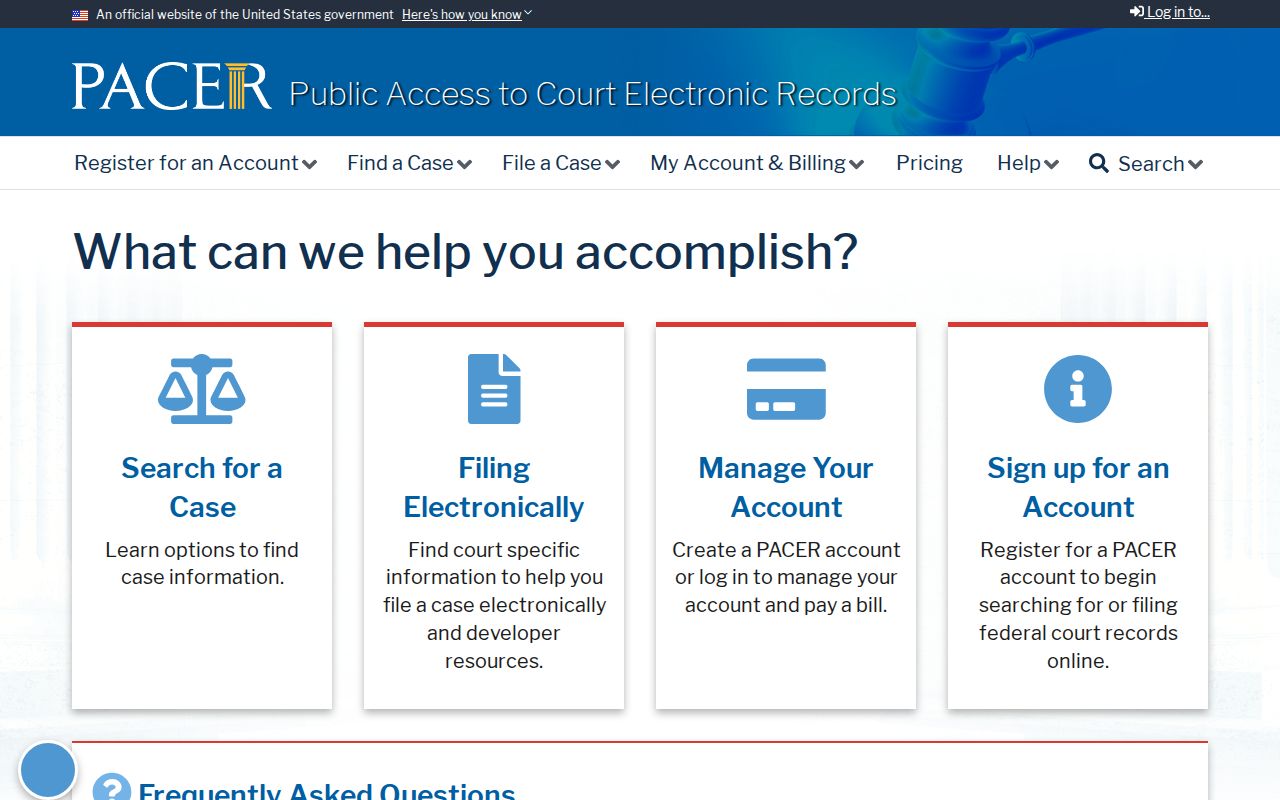
Federal party records stay separate from the Orange County Superior Court index. The court system used is part of the identity anchor.
Orange Custody and Registry Records
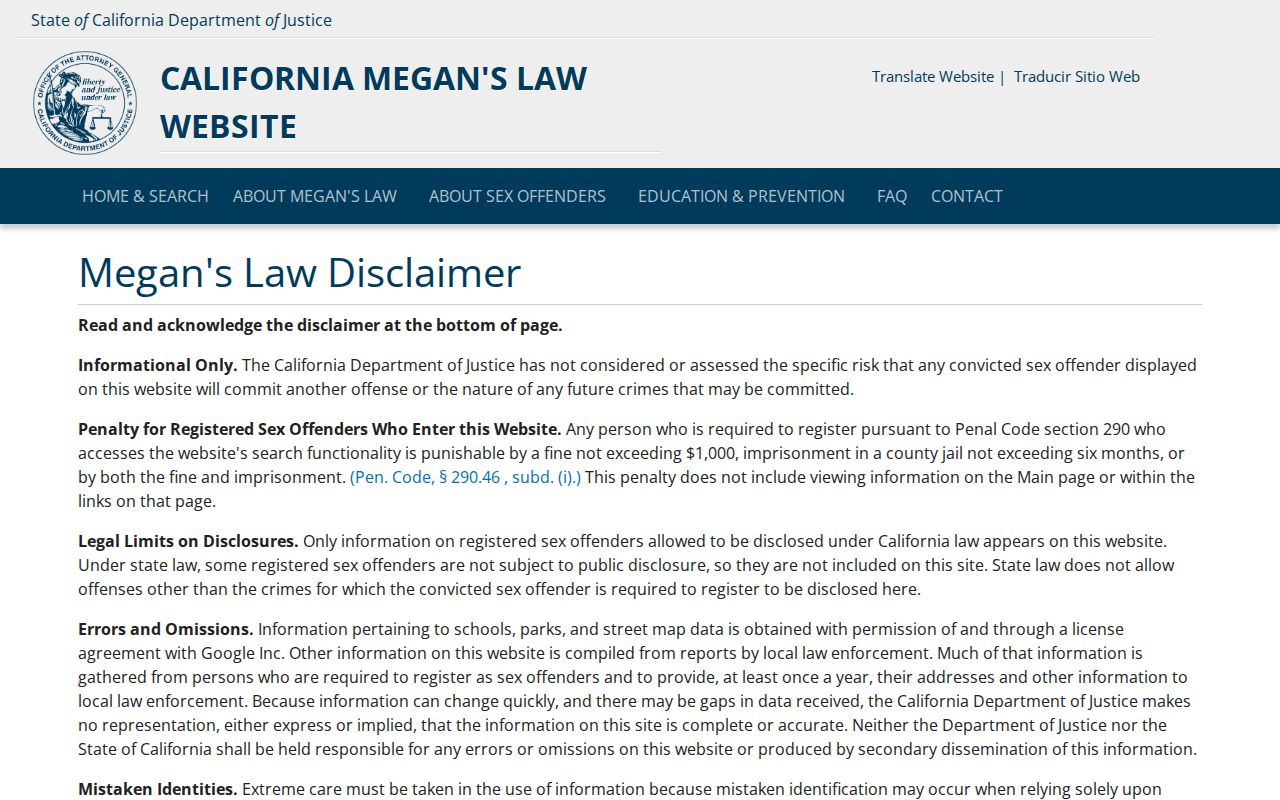
The Orange County Sheriff’s Who’s in Jail tool is a current-custody search. The CDCR Incarcerated Person Locator serves the state prison population. The California Megan’s Law site is a distinct statutory registry with name, address, map, or radius modes where disclosure permits. Use the correct system and record the capture date.
Registry results have statutory exclusions. A custody entry can change. An arrest is not a conviction. Police incident reports come from the agency that created them, such as Orange Police or the Sheriff, and active investigation, juvenile, victim, and safety limits can restrict release. A resident lookup should never collapse these categories into a general character judgment.
The official registry screen below demonstrates the location and name modes that make it different from an ordinary directory search.
Use any statutory registry only for the lawful purpose allowed by its disclosure rules and never to threaten, follow, or harass a person.
Orange Resident Lookup Limits
California’s Safe at Home program gives qualifying survivors and threatened participants a substitute mailing address and confidential voter process. Government Code sections 6205 through 6211 and related rules limit how protected address information is handled. Voter identifiers, signatures, DMV residence data, adoption records, confidential marriage records, juvenile matters, sealed cases, and restricted family records do not become open because a name is known.
Lawful personal use. An Orange resident lookup is suitable for family history, reconnecting, estate research, civic understanding, and personal safety. Do not use a record to stalk, threaten, harass, intimidate, or harm another person.
When a result is sensitive or wrong, return to the custodian. The California Public Records Act can request an identifiable existing city record, but it does not compel a new explanation or override a privacy exemption. Keep the purpose narrow, the date range clear, and the record relationship honest.